
Tackling the growing gap of consumer doubt
Role
Product Designer
Tools
Figma
TEAM
+4 members
DURATION
9 weeks
CONTEXT
Luminar is a skin analyser and product scanner app that delivers personalised insights and empowers users to make confident, informed skincare choices
objectives
Four questions driving the design journey's research.
Each research objective was designed to build on from the previous, creating a strong foundation of evidence and justification to build a strong solution.
01
Examine
Gen Z's awareness of skincare ingredients and their ability to read product labels accurately
02
Study
How misinformation spreads through social media and marketing in shaping purchasing behaviour
03
Explore
The health risks from poor ingredient transparency and the limits of Gen Z's product knowledge
04
Investigate
Industry regulations and transparency standards, and whether they adequately protect consumers today
Focusing on Gen Z's as our target audience was the best decision
They are most digitally active consumers yet, the most susceptible to influencer-driven misinformation. They are spending more but understanding less about what they're actually buying.
Highest engagement with beauty content online
Significant spending on skincare driven by packaging and marketing
Most likely to adopt new tools on ingredient information
Problem space
The appetite for immersive shopping is significantly growing and there was a need to explore this new area.
As online shopping grows, so does the growing gap between digital convenience and consumer confidence.
52%
of online shoppers hesitate to buy because they cannot physically see or try products before purchasing
Shopify 2022
Indicating that over half of consumers are losing their confidence in online shopping. While brands have explored ways to bridge the gap, many existing solutions fail to provide a seamless and engaging product evaluation experience causing:
High return rates
Products don't match their expectations, driving costs up for businesses that hurt margins and are unsustainable
Customer Dissatisfaction
Unmet expectations after purchasing decreases brand loyalty and trust, and reduces the likelihood of repeat customers
Lack of Trust
Without hands-on evaluation, shoppers will default to doubt especially for high consideration or unfamiliar products
In solving this problem, we explored online markets where the inability to physically interact with products creates the biggest barriers to trust and purchase confidence, identifying areas where immersive and reliable evaluation tools could make the greatest impact
Research
Navigating online markets and the tech sector showed new ways of thinking and designing.
PwC's 2023 Consumer Report highlights a growing demand for immersive shopping experiences:
71%
Shoppers would feel more confident buying products if they could interact with them virtually beforehand
94%
Increase in conversion rates following the adoption of Augmented Reality (AR) in the Retail sector
$61B
Projected value of the AR market in retail by 2031, indicating strong potential for digital engagement
But the opportunity comes with real design challenges
1
Accessibility
Immersive tools must be inclusive and usable across all ability levels and devices
2
User Adoption
New technologies face friction and users need intuitive onboarding
3
Decision-making
Tools must simplify choices, not complexity to the shopping experience
With the landscape in view, we stepped back and did something simple but often overlooked: we listened.
OUR APPROACH
Data and numbers tell us something is wrong, but conversations tell us why.
Preliminary survey findings
Focusing on asking questions about skincare habits, purchasing decisions, marketing and claims, negative experiences and regulatory transparency
44
Survey responses collected
88.6%
43%
Purchased the most in fashion
23%
Purchased the most in cosmetics
Gathering data through three methods to capture both what users say and what they do:
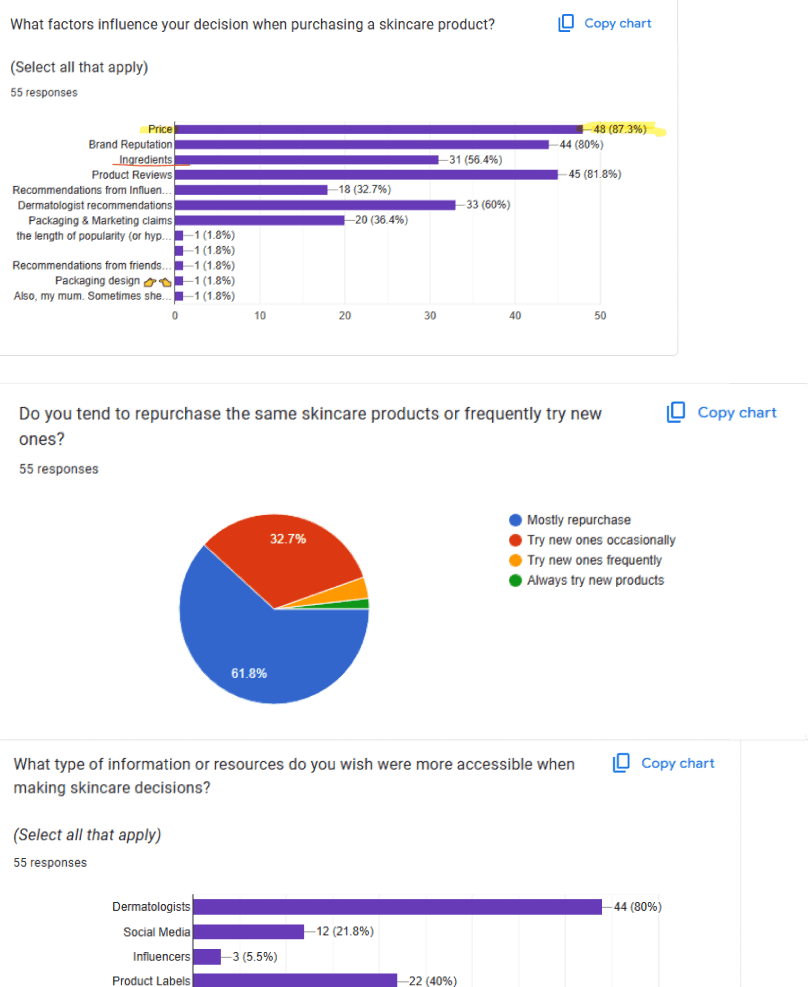
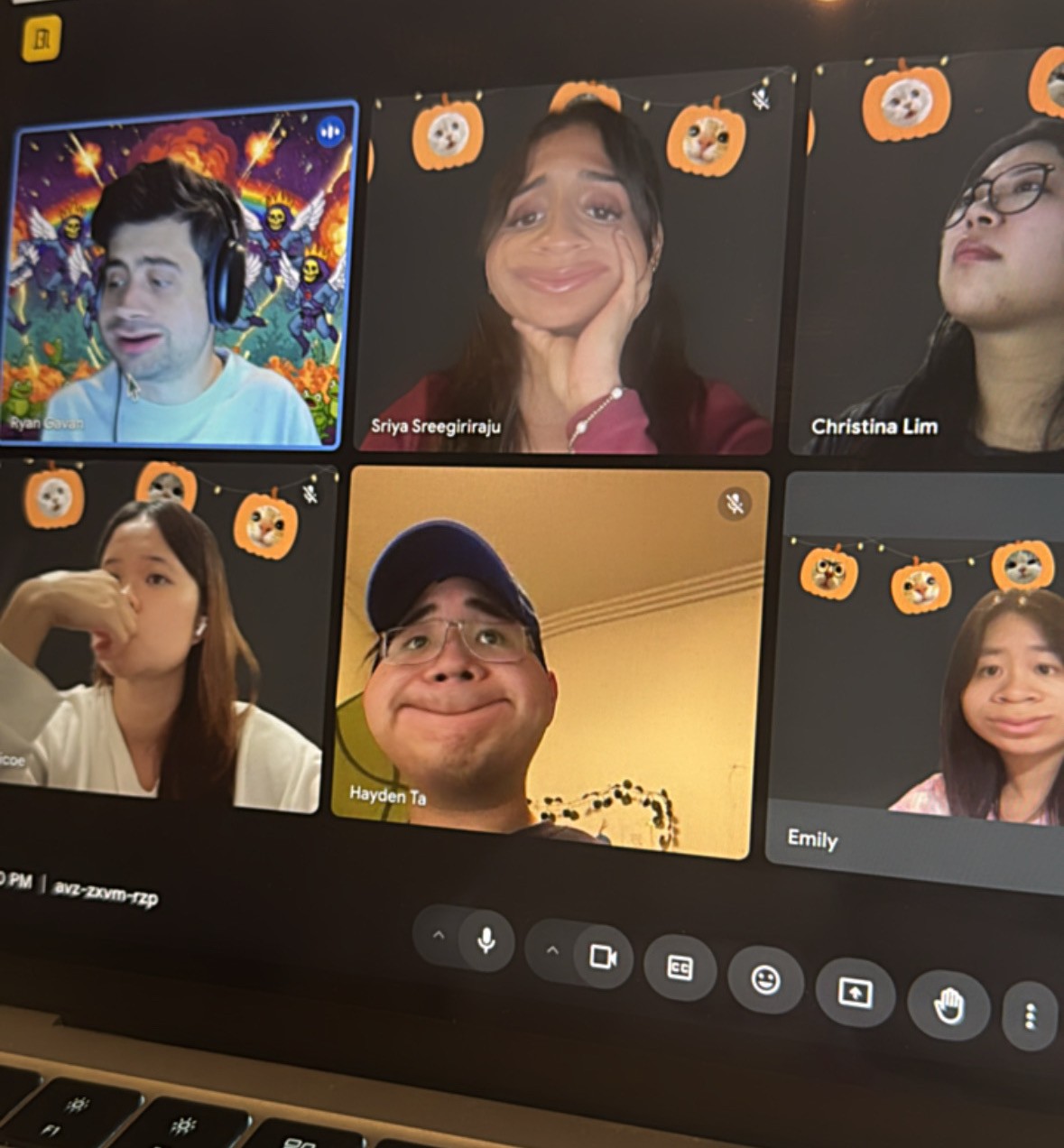
10 interviews
findings
The data spoke through surveys, ethnography, and interviews. Together, they uncovered what no single method could have found alone.
The data spoke first from the users:
SKIN REACTIONS
Irritation
BREAKOUT
ALLERGIC
ACNE
Burns
Dry
Red
RASH
REPORTED SCORES
Average confidence level
2.7 / 5
Average understanding
2.1 / 5
Researching doesn't equal understanding. This points to a quality of information out there, not just access.
SKIN REACTIONS
Dermatologist
Seen as the most credible. Users actively seek expert-backed and science-based guidance when they can access
Influencers
Viewed as paid promotion that doesn't account for individual skin types. Used but can't be fully trusted.
Surveys & interviews
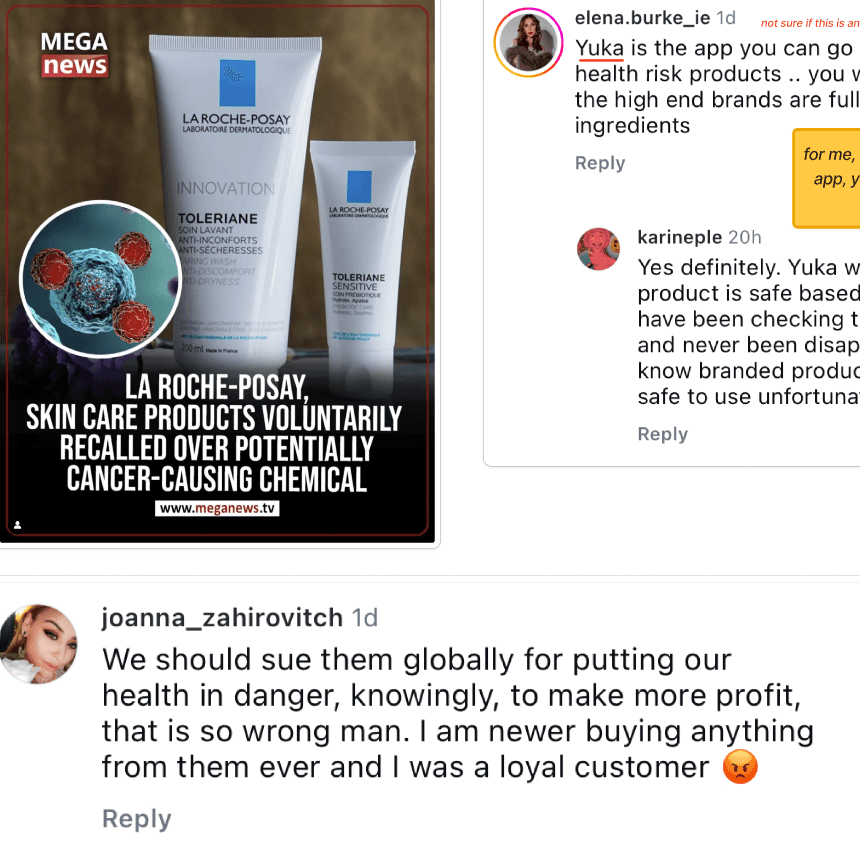
Then the patterns emerged in user activity:
"I understand that it's fake, I just wish we had an app that would actually tell us if a product is good or not. Like ingredient and quality."
@dshae1379 on TikTok
"Influencers also need to be clear that they are enthusiasts, and nothing more, and defer the actual product science to the professionals."
@stolen-kisses on Reddit
"Lying Fraud company. They charge crazy prices and it makes your skin worse!!! I've used their normal face soaps, I've used their acne face soaps, I've used their face creams. It's made my clear skin turn spotty & red"
Oliva Butter on Chemist Warehouse reviews
"We should sue them globally for putting our health in danger, knowingly, to make more profit, that is so wrong man. I am never buying anything from them ever and I was a loyal customer 😡"
@joanna_zahirovitch on Instagram
online ethnography (snapshot)
And directed to the market gap in:
Gap 01
Ingredients
Consumers purchase health or beauty products without understanding the ingredient labels
Gap 02
Translation
Consumers need clarification on specific terms and technological claims used in the beauty industry
Disconnect
Consumers spend significantly yet remain uninformed, revealing a gap between industry promises and what is actually delivered
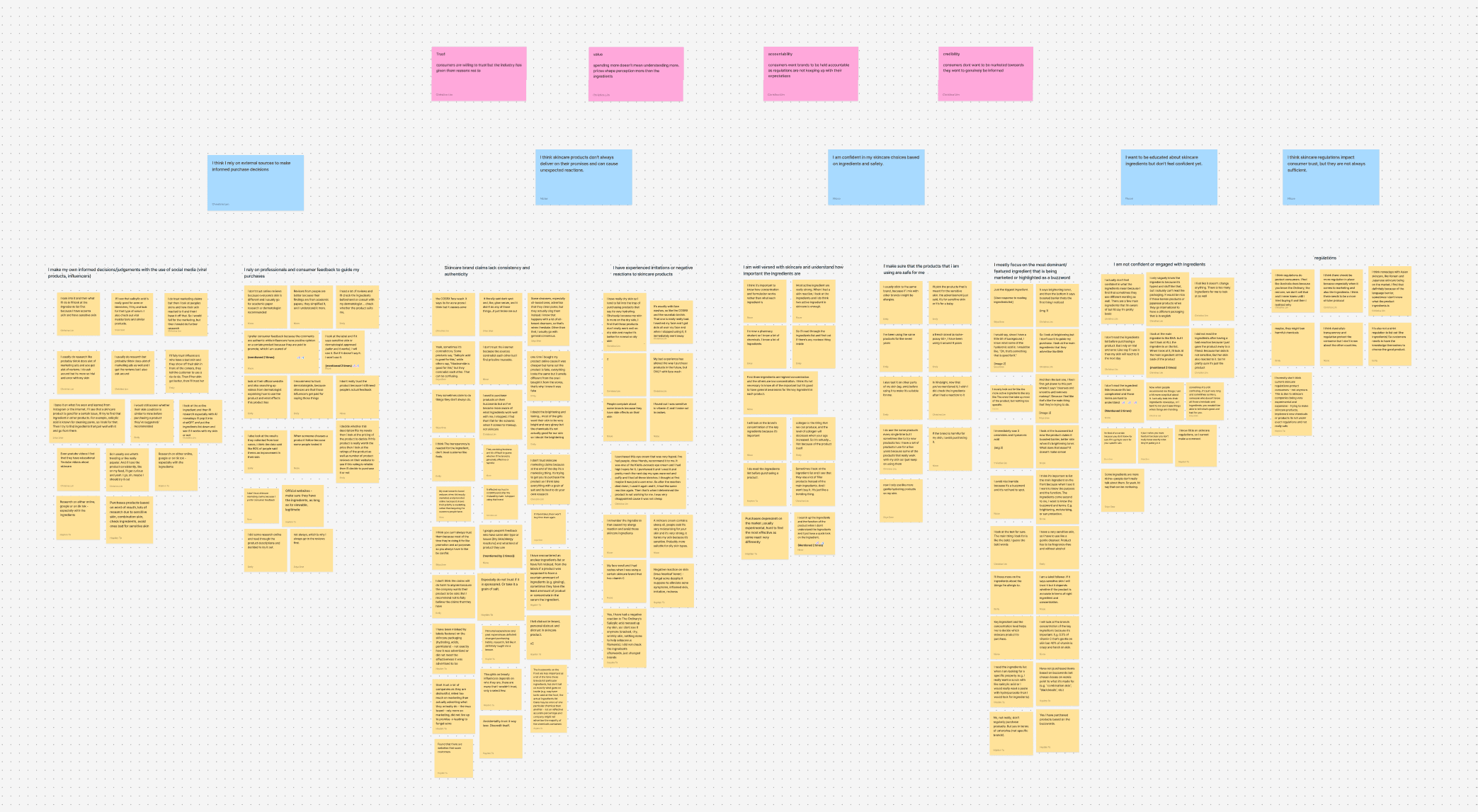
analysis & synthesis
Tracing the problem to its roots.
By asking "why", we moved past symptoms to find the real design opportunity
Individuals struggle to make purchasing decisions for skincare products
Because there is a fear that products will cause negative effects or won't suit their skin type
Because products are often misleading, confusing, unregulated and overpriced, creating distrust
Because there is a lack of accessible, science-backed education to help navigate the overwhelming range of products available
Root cause: Individuals simply do not know how to choose the right products for themselves and the industry has not made it easy for them to learn
Meet Gia, built from our data to visualise our target audience

Gia, 19
"Skincare shouldn't be this confusing. I want the guidance to have clear skin"
By a very frustrated and confused Gen Z consumer who just wants to know what she's putting on her skin
😟 Feels
Overwhelmed by products and claims
Lacks trust in influencers
⚠️ Challenges
On a budget
Can't decode ingredients
Skeptical of marketing
🎯 Wants
Clarity and expert guidance
Transparency and honesty
Understand what's in product
Four key insights emerged:
01
Trust
Consumers seek external guidance when purchasing skincare, but past disappointments have broken their trust making them hesistant to try new products
02
Value
The perceived value of skincare is tied to pricing and affordability. Cost shapes consumers' sense of quality and worth
03
Accountability
Consumers expect accountability from brands through stricter and visible regulation to foster trust to encourage them to purchase
04
Credibility
When buying skincare, consumers want credible sources. Not bold claims from brands or empty statement from influencers.
Problem Statement
The current skincare market is flooded with misleading claims and complex ingredient lists, making it difficult for many Gen Z consumers to make informed choices. The lack of clarity has limited their confidence in evaluating products as they seek products that offer the best value for their money, resulting in negative experiences with brands
How might we?
Ensure that Gen Z feel confident in skincare purchases by trusting both the clarity of information and the fairness of pricing?
opportunity
Examining existing opportunities in the market
While there are tools to help consumers navigate their skincare journey, each falls short in their own way, clearing an opportunity for my team to create a better solution
App
What it does
Where it falls short
Stilla Skincare Scanner

Scans product barcodes and display ingredient lists to reduce hesitancy and increase trust
MISSING FEATURE
Does not warn users about the conflicting ingredient combinations which is a critical gap for those who have sensitive skin
Skin Bliss: Skincare Routines

Help users build and track a personalised skincare routine with community sourced product recommendations
RELIABILITY ISSUE
User-generated database is not reliable. It can create misinformation
Yuka: Food & Cosmetic Scanner

Scores products using a colour-coded rating system designed to simplify complex ingredient data
DESIGN FLAW
Scoring model heights concerns rather than build confidence. There is no personalised or actionable guidance
competitor analysis
What the market kept missing:
⚠️
Knowledge gap
All apps aim to reduce hesitancy but don't address the knowledge gap
⚠️
Unreliable data
Reliability depends on the data or scoring, hindering building a genuine connection
⚠️
No personalisation
None provide ingredient conflict warning personalised to the user's individual skin type
Every gap my team uncovered in the problem space, market, and with competitors all pointed to the same thing
AI/AR was growing. The need was proven. All that was missing was something built to educate
ETHICAL CONSIDERATIONS
Building with AI and AR comes with responsibility.

Skincare is personal. When AI and AR enter that space, the questions of credibility and accountability follow closely behind. Building something that touches people's skin, self-image, and health means responsibility is priority.
rISK 01
AI and AR bias and inaccuracy
AI skin analysis can produce bias or inaccurate results depending on the training data.
Examples: skin tones, types, conditions.
mITIGATION
Partner with dermatologists and healthcare tech experts to ground the AI in clinical credibility and reduce the risk of biased outputs.
rISK 02
Privacy and data security
Luminar collects facial scan data and personal skin information, some of which are sensitive information and poses a privacy and security risk for users.
mITIGATION
Data encryption and full GDPR compliance to ensure every piece of data is stored, handled, and protected to high standards.
rISK 03
Misuse of scan results
A clear line between education and diagnoses needed to be drawn. Users may interpret AI scan results as professional diagnosis leading to self-treatment decisions.
mITIGATION
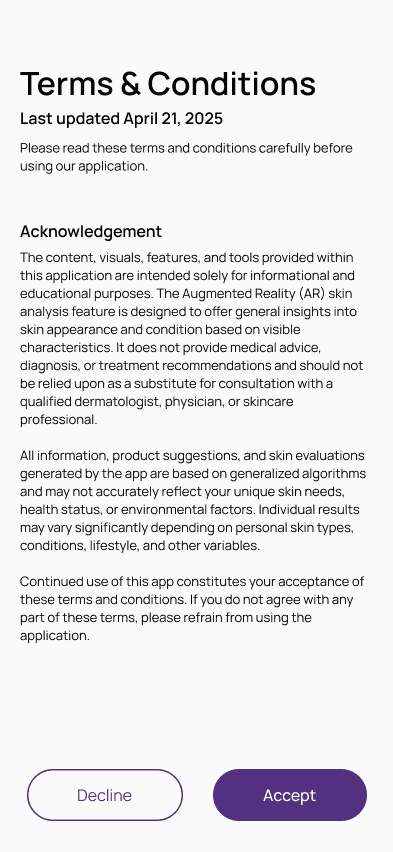
A clear disclaimer built into onboarding. Not buried in settings, not skipped over. Front and centre, so users always know exactly what the technology can and cannot do.
information architecture
There was a lot to figure out. Where to start? What to include? What to leave out?
The three common threads; knowledge gap, unreliable data, and lack of personalisation, shaped every decision in our information architecture. Grounded in what the research uncovered, each flow in Luminar was designed intentionally to fill a gap the current market had left wide open.
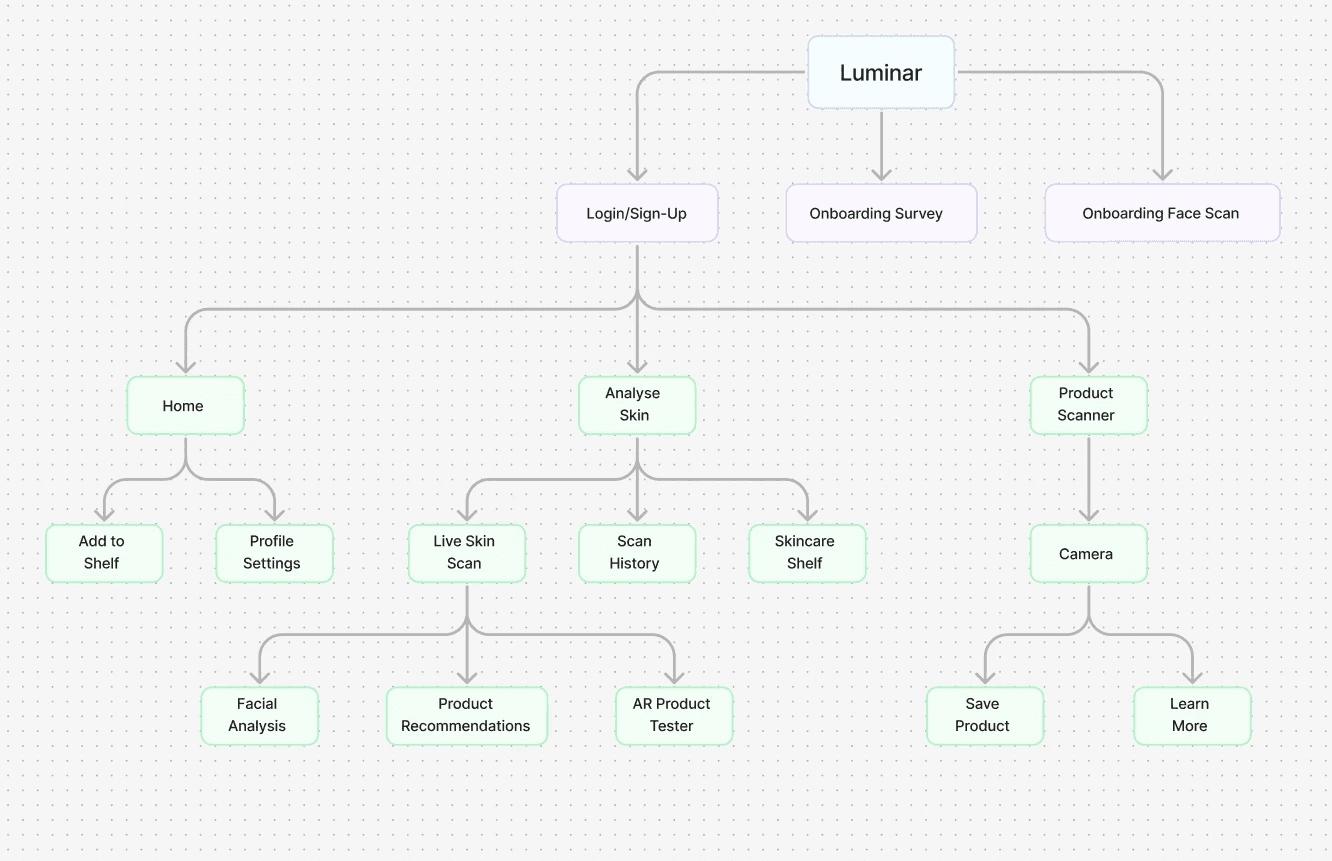
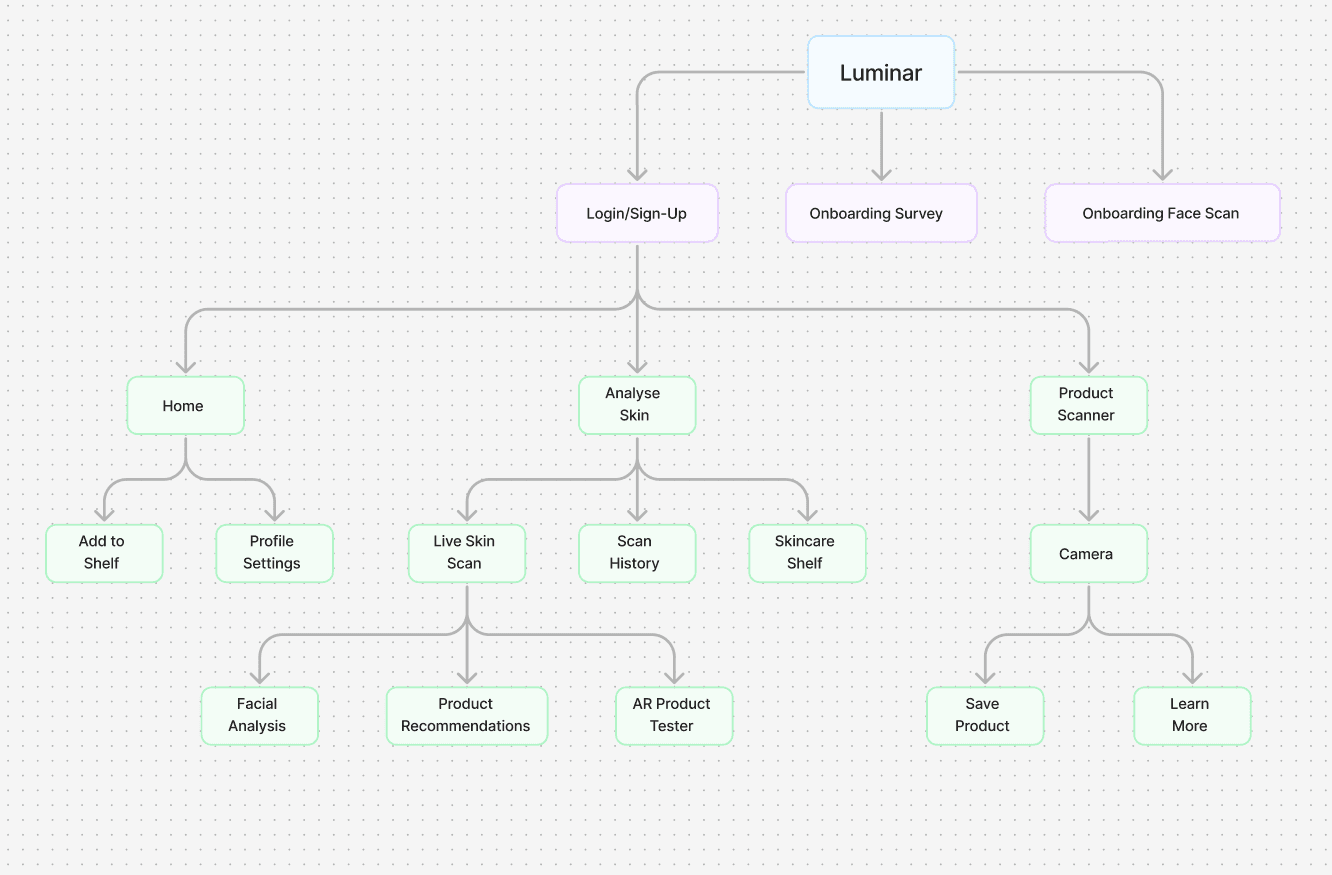
information architecture
dESIGN PROCESS
From first frames to final prototypes. This is the process of it all.
Nine stages. Four iterations. Every round of feedback made it better
Stage 01
Initial Wireframes
Rough mapping on core flows
Stage 02
1st Iteration - Mentor Feedback
Revised after feedback to refine structure and flow
Stage 03
Pilot testing
Pre-test to validate the concept and identify early concerns
Stage 04
2nd Iteration - Post Pilot
Wireframes iterated to address issues during testing
Stage 05
Mid-Fidelity Mockups
Design system applied and added more structure and visual consistency
Stage 06
3rd Iteration - Final Mid-Fidelity Mockups
Mockups refined for testing
Stage 07
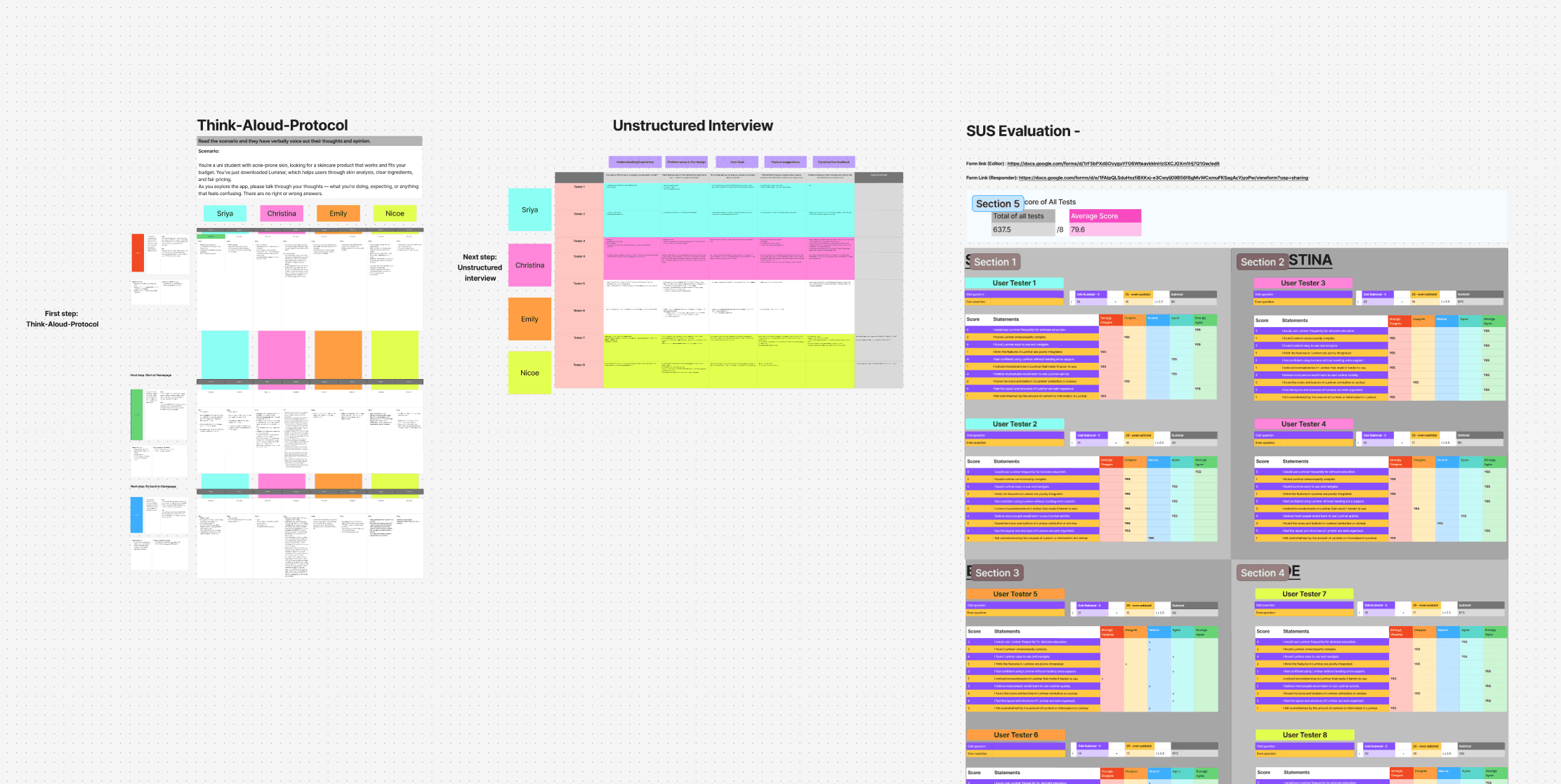
User Testing
Think-Aloud, Unstructured Interview, SUS Evaluation
Stage 08
4th Iteration - Post User Testing
Final round of iterations driven by user-testing insights
Stage 09
High-Fidelity Prototypes
Mockups are polished, all interactions are prototyped and ready to be handed of
screens
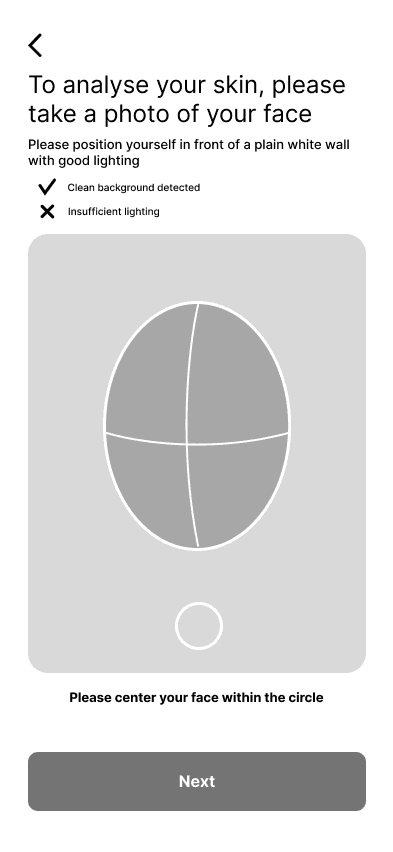
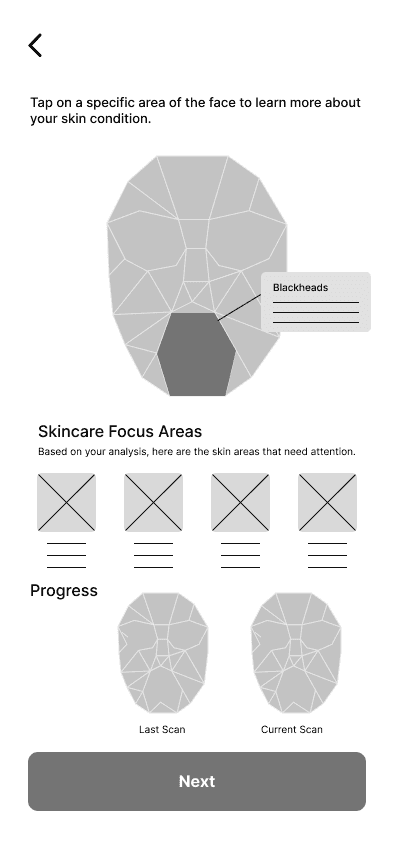
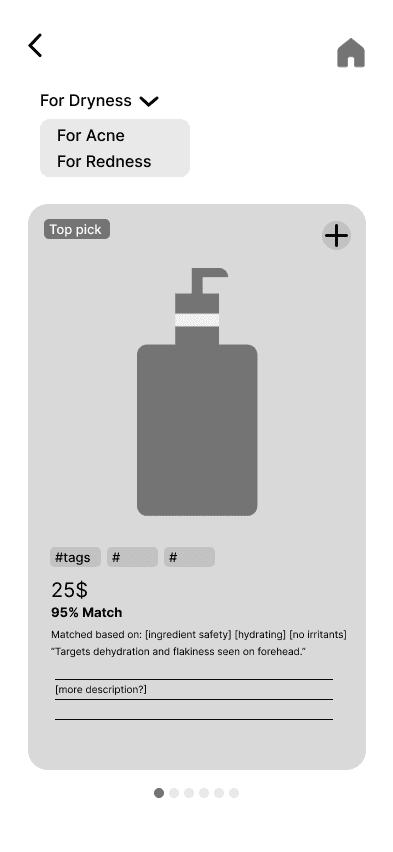
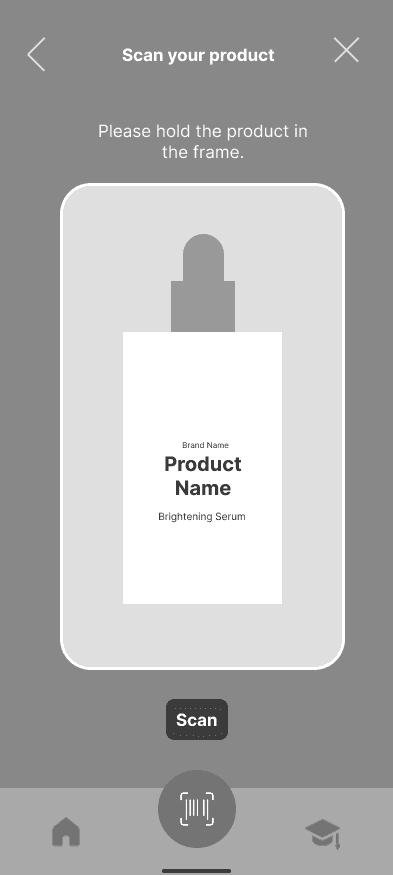
Following the design process, these are the outcomes.
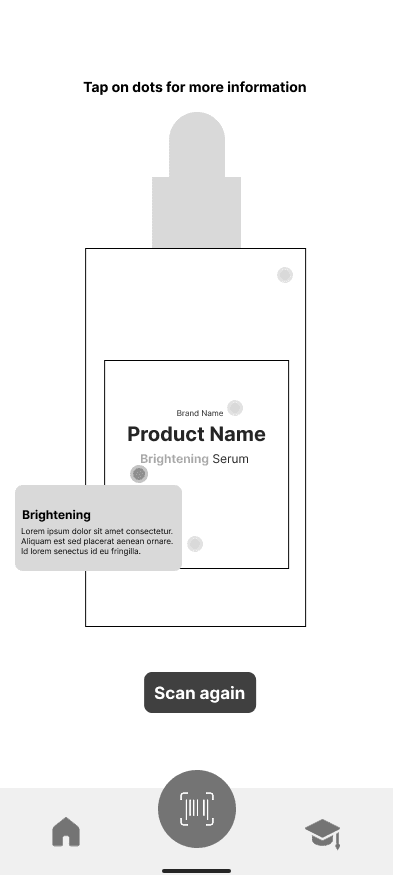
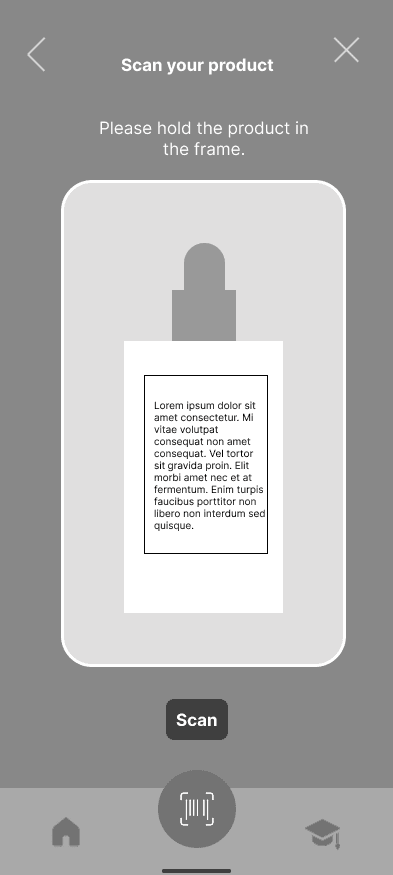
Low-fidelity

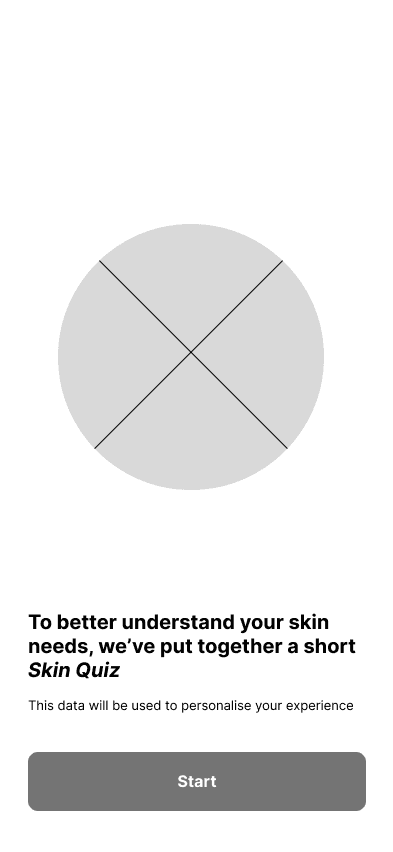
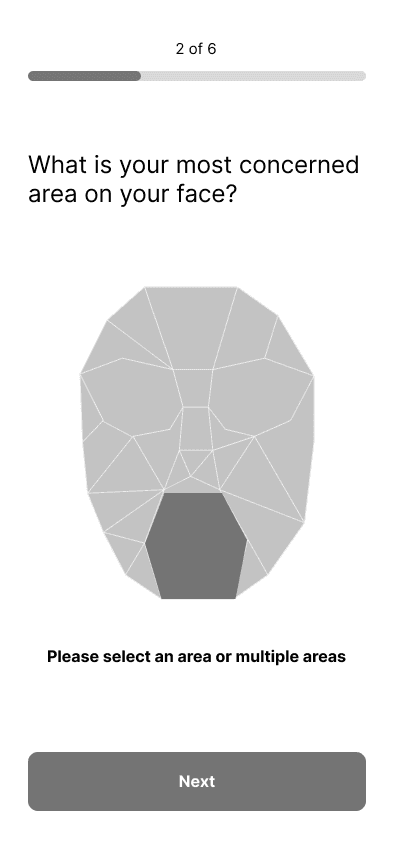
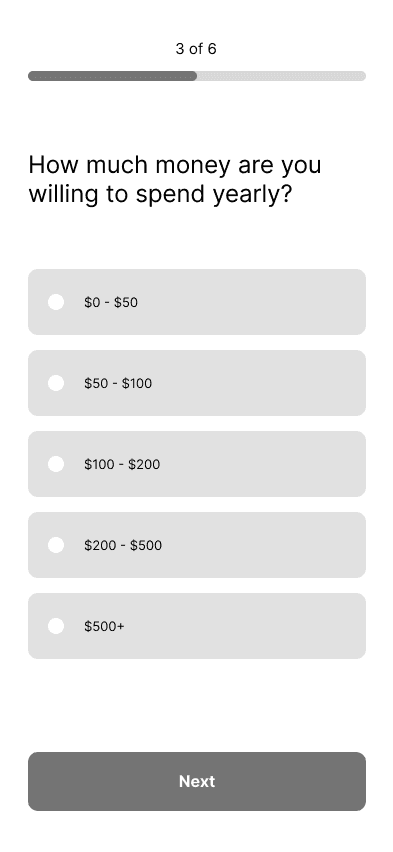
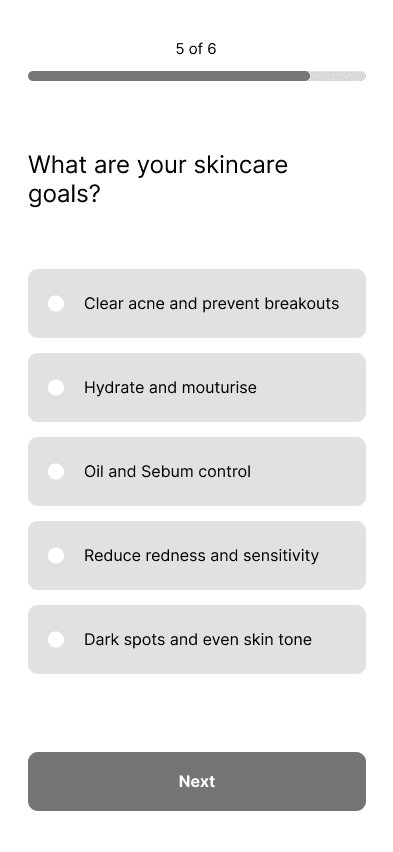
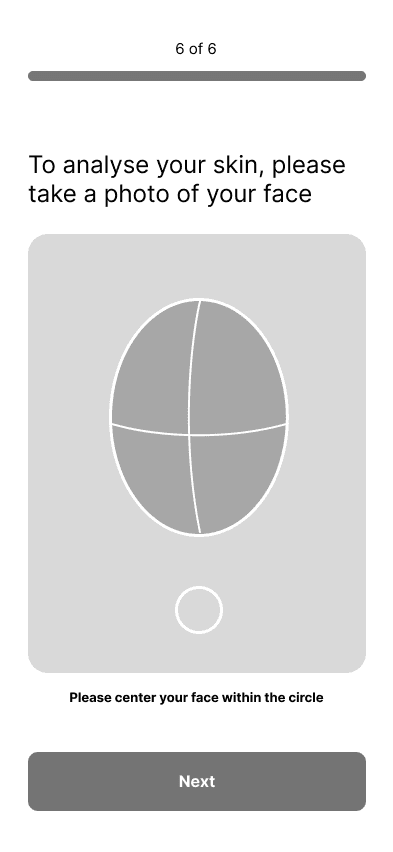
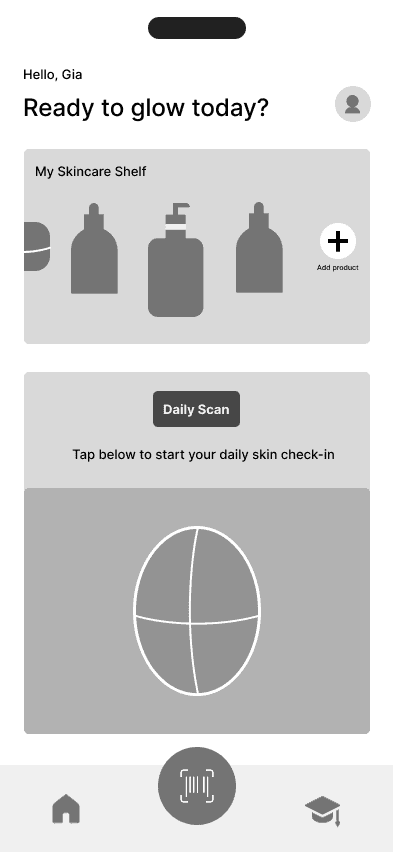
Design System
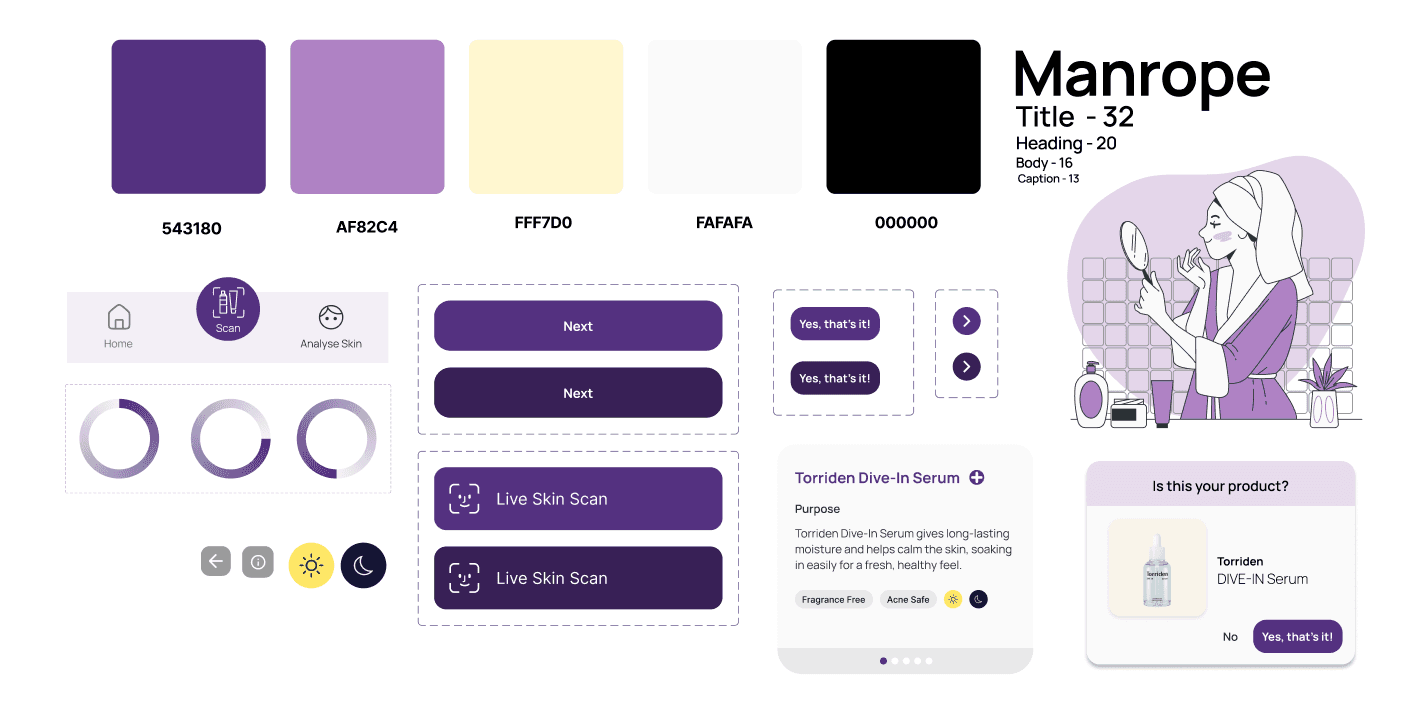
As the main user pain points circulated around trust and credibility with brands and influencers, my team set the design system around gradients of purple.
Purple carries a sense of authority and when joined with a soft lavender, it creates an approachable but trusting visual language.
Mid-fidelity
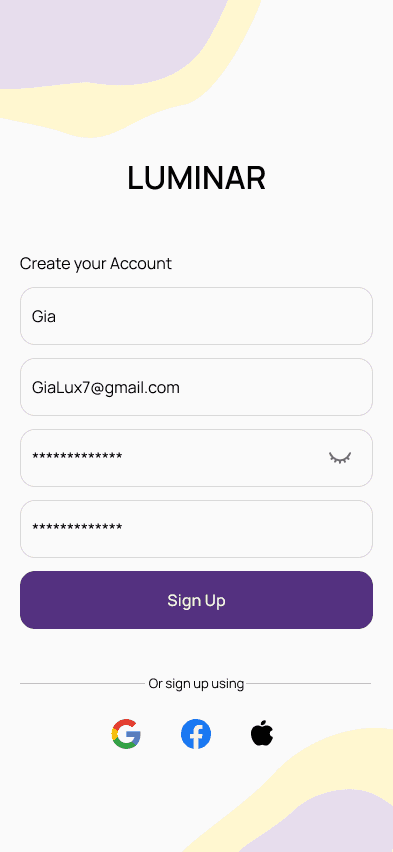
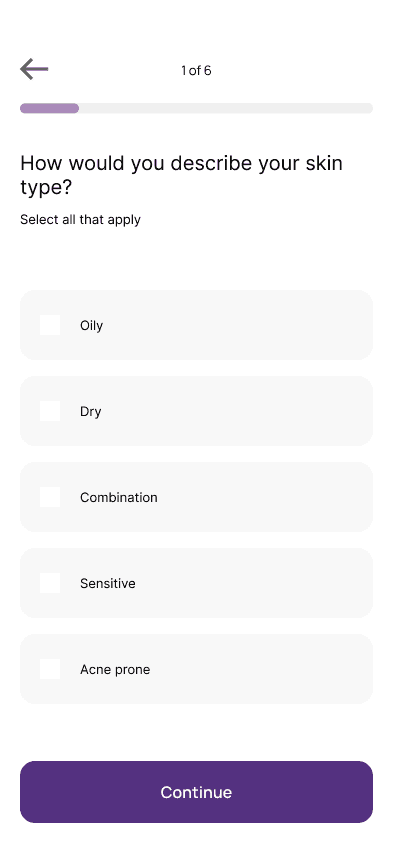
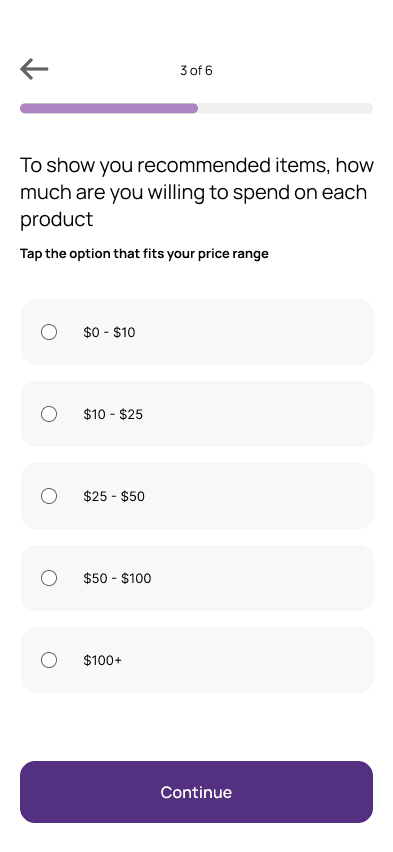
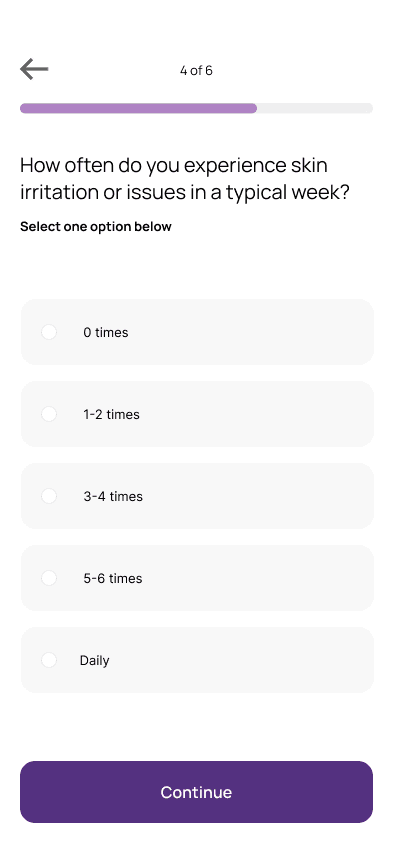
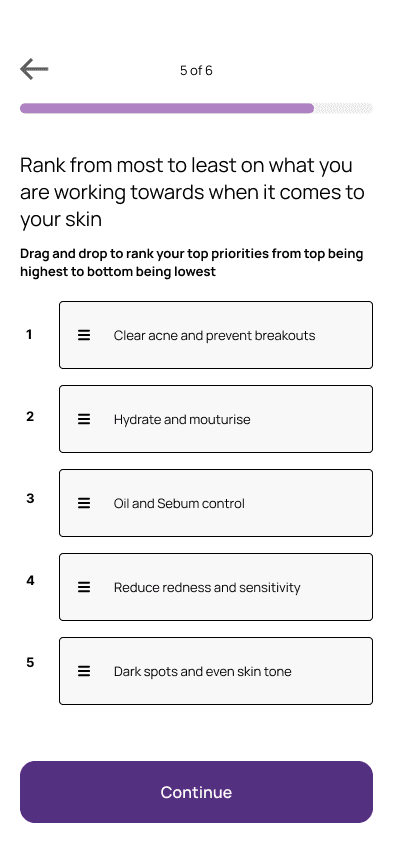
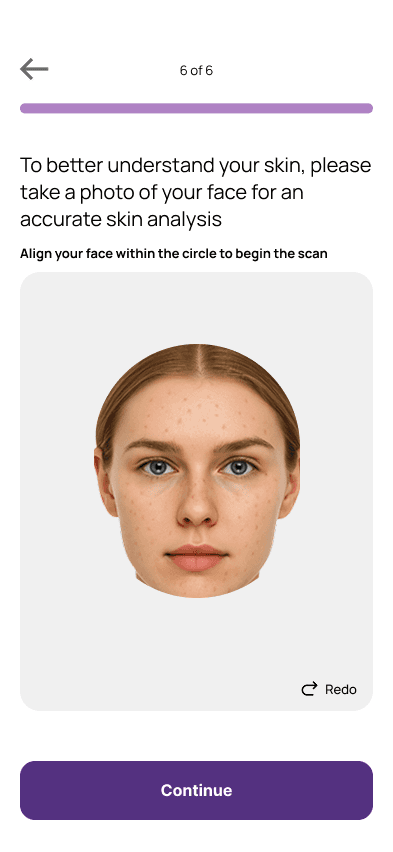
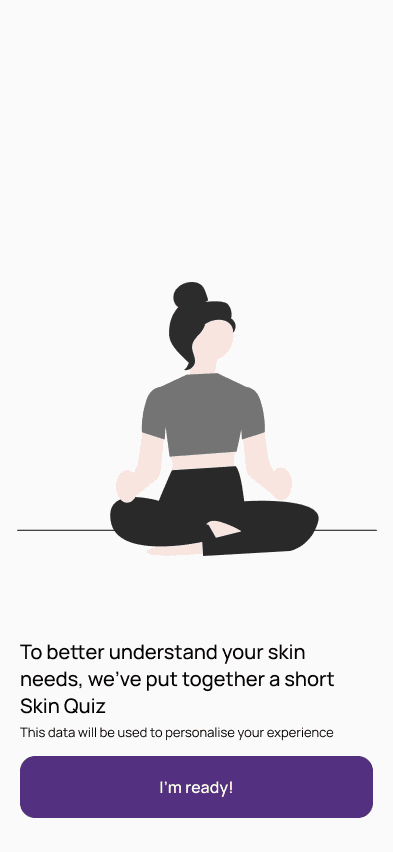
Sign up and onboard
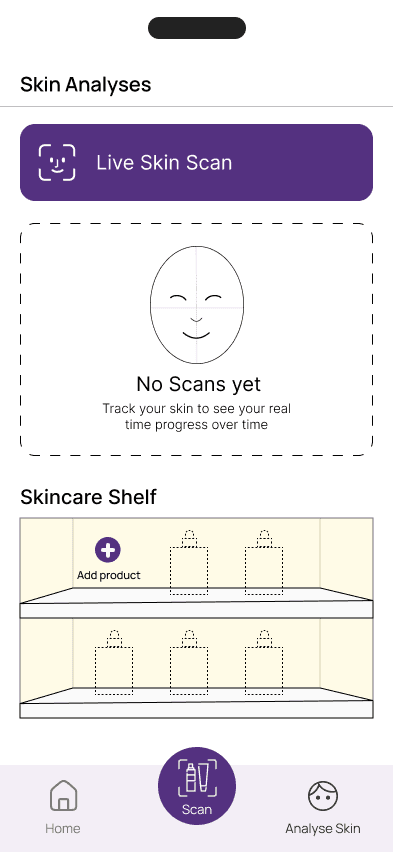
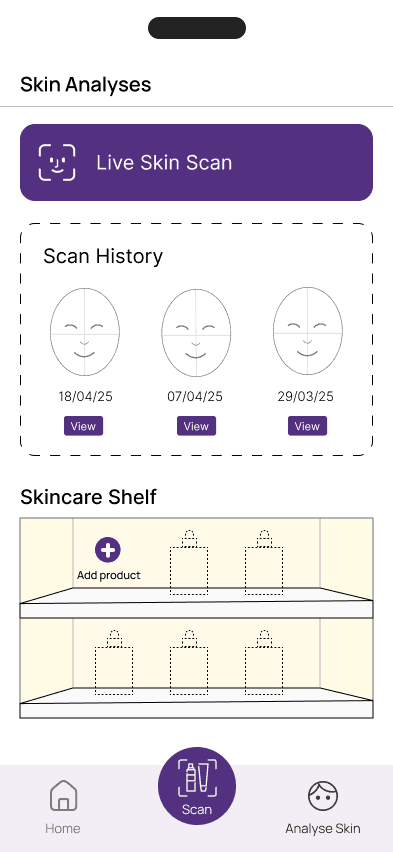
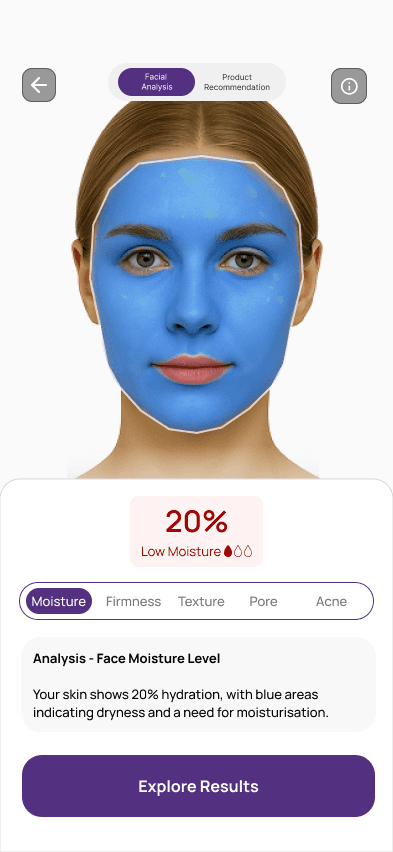
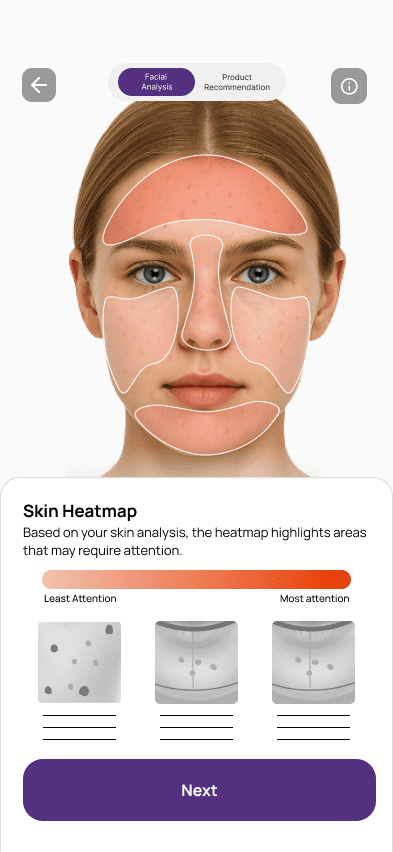
Skin scan
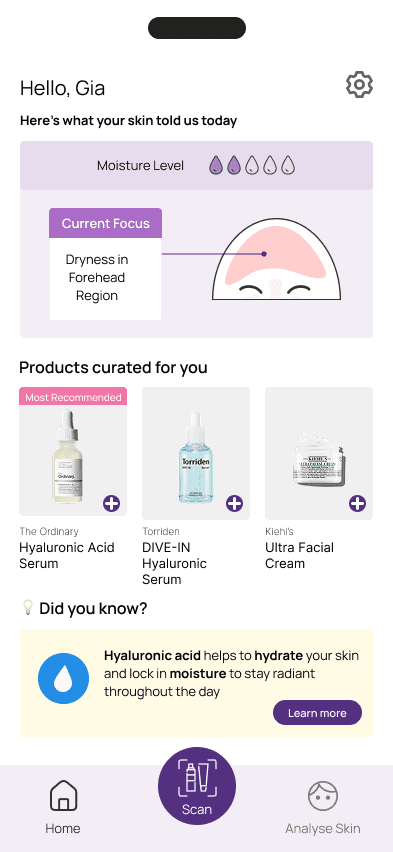
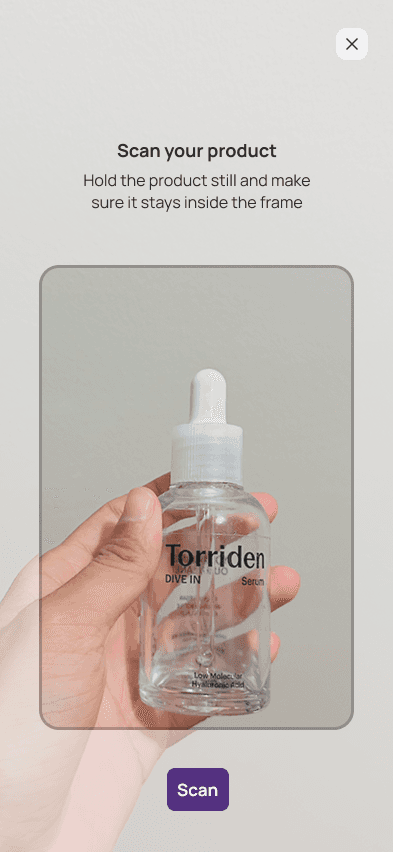
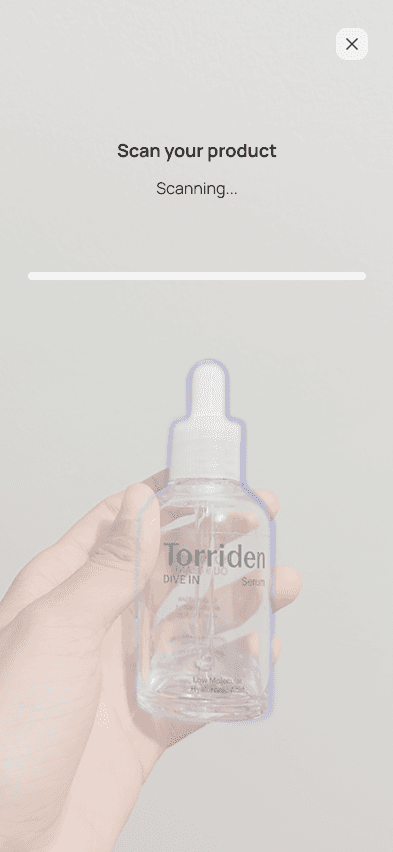
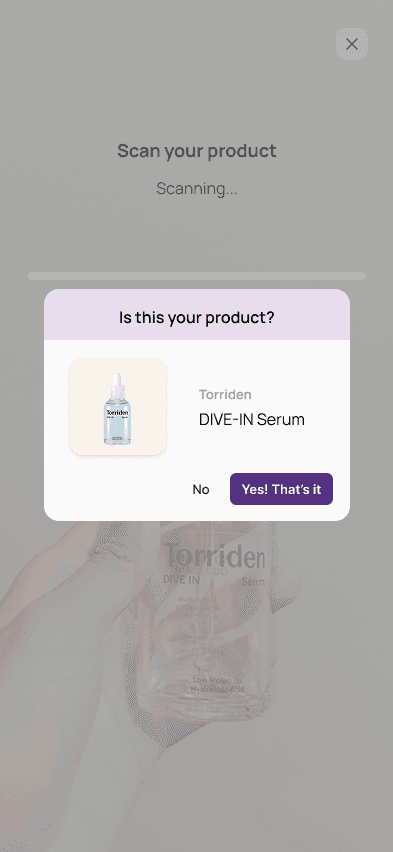
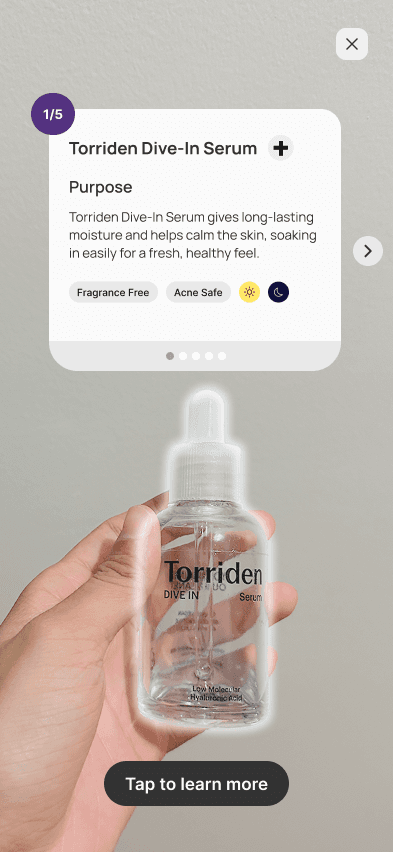
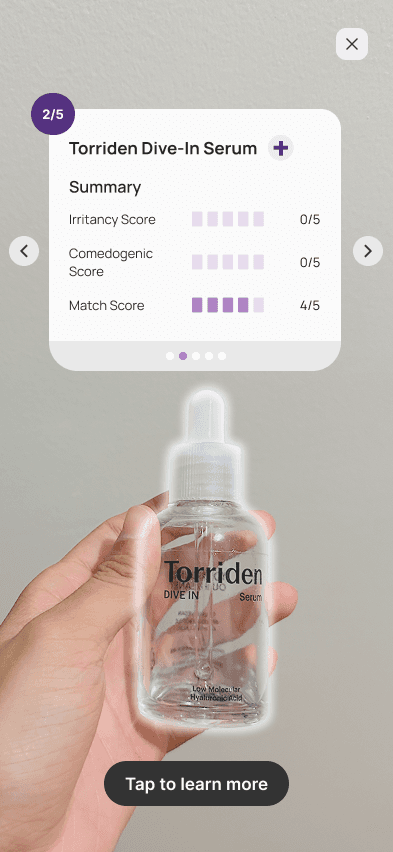
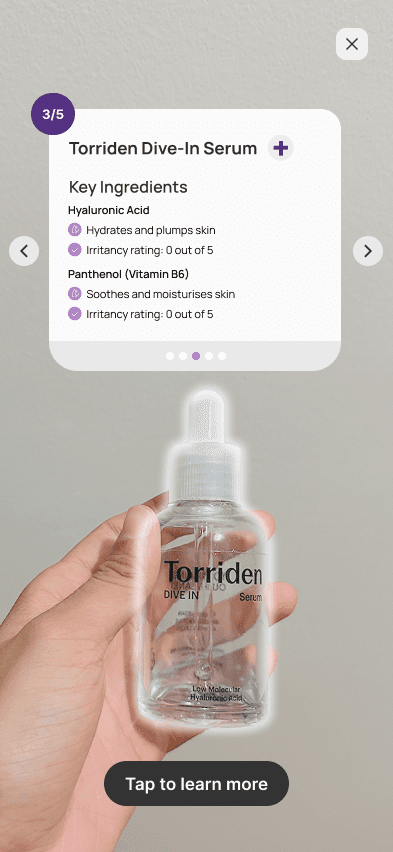
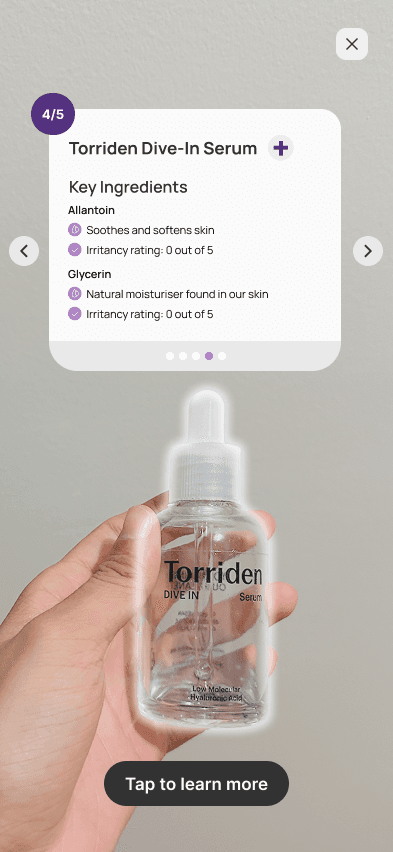
Ingredient scan
User feedback
8
Participants
79.6
System Usability Score out of 100
3
Testing methods - Think Aloud, Interview, SUS
The main user feedback points suggested us to iterate on:
Feedback
Iterations
Excessive components
Redundant use of component
Simplified UI
Focused on creating a cleaner and more focused experience
Text-heavy screen
Too much text made users feel overwhelmed
Removed large chunks of text
Replaced with concise labels to reduce cognitive load
Icon confusion
Some users were unsure about the meaning of certain icons
Replacement
Remove ambiguous icons with globally recognised icons to ensure users can complete every step
No ingredient breakdown
They wanted to understand what was actually in their skincare, not just receive a recommendation
Addtional feature
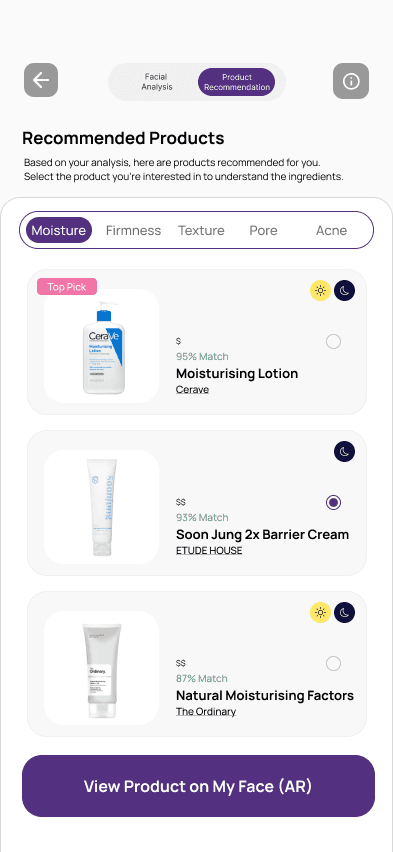
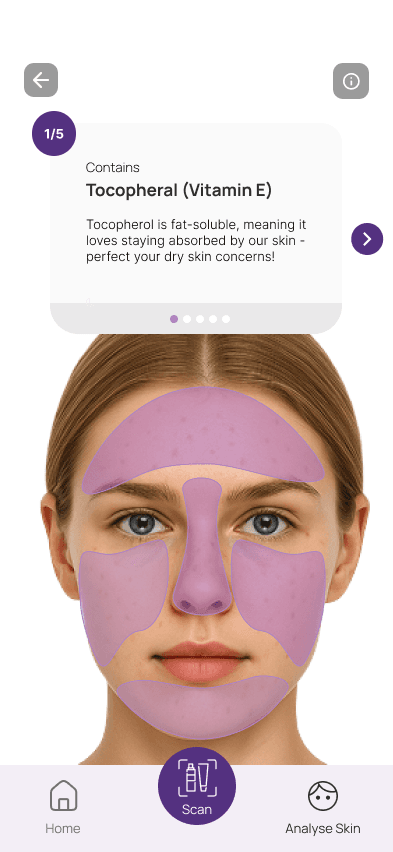
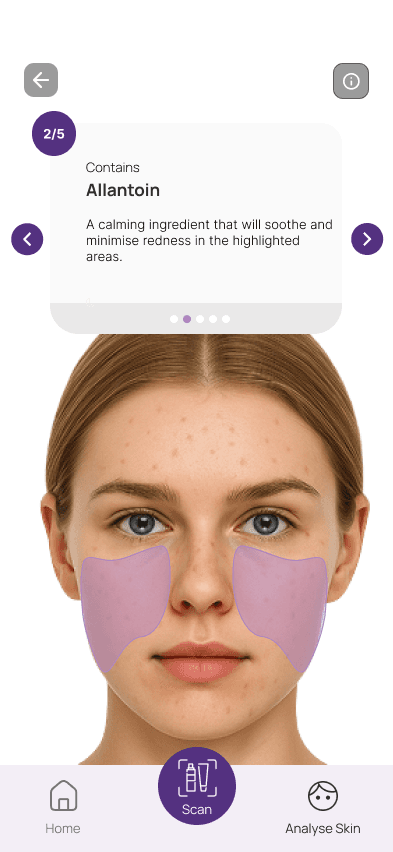
An ingredient breakdown was added to each product, explaining what every key ingredient does
Privacy concerns
Users felt unsafe about the idea of completing a facial scan and where their data would be stored
Additional page
Including a privacy disclaimer within the onboarding process to explain data storage, hoping to ease tension
solution
The skincare market had a problem, Luminar became the solution.
Answer a few questions. Let AI do the rest.
A quick face scan and a few questions is all it takes. Luminar builds a profile tailored entirely to the user, learning their skin concerns, preferences and goals before they ever open a product page. Because the app uses AI and AR, transparency about how data is used isn't an afterthought. It is built into the experience from the very first screen.
Understanding your skin becomes easy.
Skin is always changing. The Live Skin Scan captures that in real time, providing a visual breakdown of current skin conditions and surfacing products tailored to what it actually finds.
Spend less time researching with AR technology.
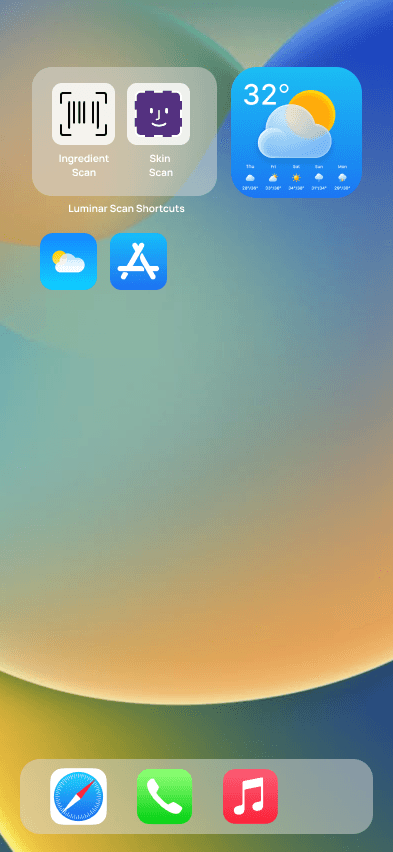
No research needed. The Product Scanner is accessible straight from the control centre. Point, scan, and let AR do the work. Each ingredient is matched against the user's skin profile to show whether a product actually works for their skin.
retrospective
Upon reflecting after the end of the project, here's what I've got to say.
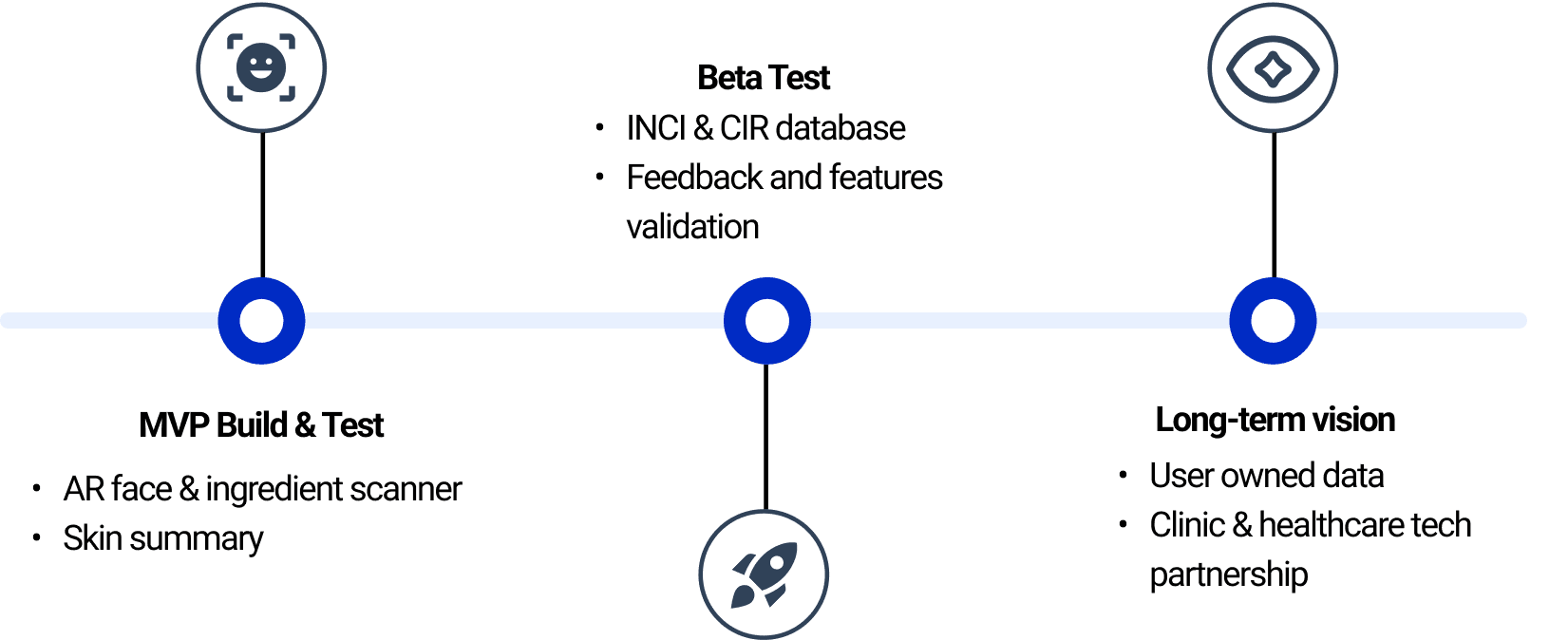
The roadmap that follows after the completion of this project would go through three phases:
The past 8 weeks in Prodigi's PIP cycle was a learning experience that I will always carry with me into future projects.

Working alongside talented designers from diverse academic backgrounds challenged me to grow as both a designer and as an individual.
I developed a deeper sense of empathy in my design thinking and learnt to embrace everyone's differences in a team.